
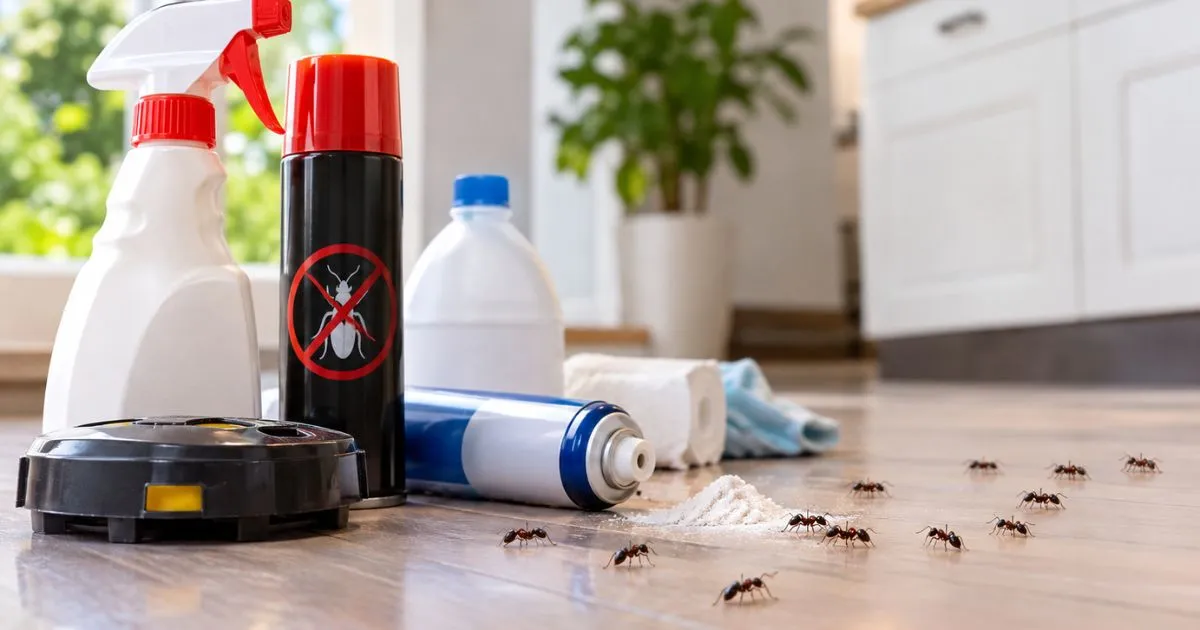
DIY Pest Control Mistakes — Why “Ant Spray Not Working” Is So Common
By The Savers Pest Control Team
DIY pest control mistakes rarely look like mistakes while you’re making them. Spraying visible ants feels like the obvious move. Sealing a gap the moment you spot it feels responsible. Reaching for a bug bomb feels efficient. Each of these can make the problem worse. Not because you were careless, but because of how ants, cockroaches and termites actually behave.
DIY pest control mistakes usually fail because they treat the pests you can see, not the colony or the source. Repellent sprays can split ant colonies, bug bombs miss hidden pests, and sealing too early pushes activity deeper. Identify the pest, use targeted bait or treatment, and fix the food and moisture source first.
In Lahore homes, where summer heat and monsoon humidity keep ants and cockroaches active for long stretches of the year, these habits are easy to fall into.
Why Ant Spray Triggers “Budding” — Splitting One Colony Into Many
Why does spraying ants sometimes mean seeing more of them afterward, not fewer?
Entomologists have a specific name for this: budding. Pharaoh ants are the classic example, and ghost ants spread in a similar way. When a repellent spray disturbs them, the colony doesn’t retreat. A queen and some workers break off and set up new nests deeper in your walls. Not every ant you see is a budding species, which is why identification comes before spraying.
Why Squishing a Single Ant Can Backfire
Does killing individual ants you see actually reduce the population?
No. The ants on your counter are foragers, a small part of the colony. Killing them leaves the queen, the brood and the food source untouched, so new foragers arrive within days. Ants follow chemical trails, so wiping the trail with soapy water and leaving bait works better than chasing individual ants.
Bug Bombs — A Common DIY Mistake With Real Documented Risk
Does the fog actually reach where pests are hiding?
Rarely. The mist settles on exposed surfaces and doesn’t reach the cracks, wall voids and furniture joints where cockroaches and bed bugs hide. The Environmental Protection Agency has specifically warned that improper use of foggers can cause health problems and even fires, and this method frequently drives pests deeper into wall voids instead.
Bleach Down the Drain — Another Mistake, Not a Fix
Bleach is a cleaner, not a pest-control product. Repeated use can wear on pipework, and mixing it with other cleaners can release toxic fumes. It may kill the odd cockroach it touches, but it won’t reach nests or egg cases further back in the drain.
Why Sealing Entry Points Too Early Backfires
Where do pests actually go when you block the obvious gap?
If pests are already established inside when you block their known route, they don’t disappear, they find new routes, sometimes deeper into the structure. Sealing works best once activity has been properly assessed, not as the first reflexive step.
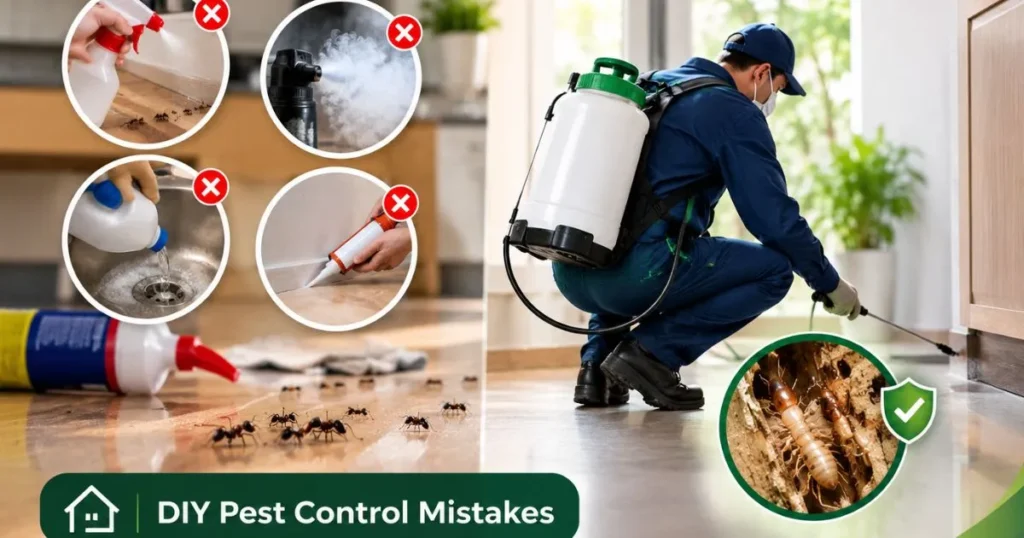
Pest Control Mistakes to Avoid — Method vs What Actually Happens
DIY Method | What Actually Happens |
Spraying ant trails | Can trigger budding, splitting one colony into several |
Squishing visible ants | Releases pheromones, doesn’t touch the nest |
Bug bombs/foggers | Rarely reaches hidden pests; can drive them deeper |
Bleach down drains | Damages plumbing, doesn’t reach nests or eggs |
Sealing gaps immediately | Can push pests to find new, harder-to-find routes |
What to Do Instead of Spraying: A 6-Step Plan
Why Does Pest Control Keep Coming Back? The Real Answer
Most store-bought sprays and traps kill visible workers, but the queen and colony structure typically remain untouched. New workers simply replace the ones that were killed, The source was never treated, only whatever was visible that day. If a professional treatment failed instead, that is a different problem.
Why This Matters More for Commercial Properties in Lahore
Restaurants and commercial kitchens pay more for these mistakes because pest control is checked during Punjab Food Authority inspections.A DIY bug-bomb approach that drives cockroaches deeper into a commercial kitchen’s wall voids can complicate an eventual professional inspection significantly.
Lahore’s monsoon and summer months add a specific seasonal risk: humidity and heat both accelerate how quickly a “quick fix” mistake compounds, since the same conditions drawing pests indoors also support faster population recovery after a DIY method fails.
A Real Look at How DIY Mistakes Play Out
We want to be upfront here: we don’t currently have a single documented case demonstrating this exact budding-response scenario on one Lahore property. In general practice, this is how it plays out: a property reports spraying a visible ant trail, seeing activity disappear for a few days, then noticing ants in a completely different room weeks later, consistent with a colony that split rather than one that was eliminated. If you’ve experienced pest activity spreading to new areas after a DIY treatment, this is a genuine, common pattern, and we’d welcome hearing the details.
Why Store-Bought Products Carry Another Genuine Limitation
Why can’t a generic spray from a local shop just be made stronger to compensate?
Because these products are designed for broad, general-use safety across countless scenarios, not concentrated enough to interrupt a specific pest’s actual breeding cycle. Product labels specify exact application sites, required protective equipment, and re-entry timing for tested reasons: outdoor-only formulations used indoors can create safety risk without improving results, “doubling up” a concentrate doesn’t mean doubled effectiveness, some species can develop reduced sensitivity to overused active ingredients over time, and skipping label-specified re-entry windows exposes people and pets to residue unnecessarily.
Why Misidentification Compounds Every Other Mistake
Does it really matter which species you’re dealing with, if the general approach is similar?
Yes. Bait that works on one ant species can be ignored by another, because species prefer different foods.Before buying anything, note the ant’s size and colour, where the trail enters and leaves, and what it is feeding on, then take a clear photo. That helps a technician far more than memory does.
Why Remote Owners and Household Staff Face an Added Risk
Does a general instruction like “spray if you see something” actually cause harm?
It can. If you manage a Lahore home or rental from a distance, or leave pest control to household staff, “spray if you see something” hands the riskiest decision to the person least able to judge it. Give a simple rule instead: don’t spray ant trails, photograph the activity, and call us.
A Quick Self-Check Before Reaching for Any Product
Do you know which specific pest you’re dealing with, or are you assuming? Has a previous attempt on this activity already been tried? Are you dealing with ants, cockroaches, or termites specifically, where colony structure matters?
Why “It Worked Last Time” Genuinely Doesn’t Mean It’ll Work Again
A DIY method that appeared to resolve one incident genuinely doesn’t guarantee the same result on a different occasion, even involving what looks like the same pest, since colony maturity, species-specific behavior, and how established the activity already was all vary between incidents in ways a visual inspection alone can’t fully account for.
This is genuinely why a method that seemed to work once shouldn’t automatically become the default response to every future sighting, each new occurrence deserves its own honest assessment rather than an assumption that whatever worked before will work again.
What Genuinely Useful Documentation Looks Like Before Calling a Professional
If a DIY attempt has already been made before calling a professional, being able to describe specifically what was used, when, and what happened afterward genuinely helps a technician understand whether you’re dealing with budding, misidentification, or simply an incomplete initial treatment, rather than starting the diagnosis from zero.
This genuinely matters more than it might seem, a DIY history that gets left out of the conversation means a technician may end up recommending an approach that was already tried and already failed, wasting time on both sides.
Why Waiting Too Long to Reconsider Also Carries Real Cost
Just as reaching for a DIY method too quickly can trigger the mistakes covered throughout this guide, sticking with a failing approach for too long genuinely carries its own cost, a colony that’s had extra weeks to establish or split further is measurably harder to fully address than one caught while still contained.
Genuinely balancing these two risks, acting too hastily versus waiting too long, comes down to the same self-check covered above: knowing what you’re dealing with, and being honest about whether a previous attempt actually resolved it or simply made it less visible for a while.
The Common Thread Across Every Mistake in This Guide
Every mistake covered here shares the same underlying pattern: treating the visible symptom, the ant trail, the roach sighting, the crack in the wall, as though it were the entire problem, when the actual source, the colony, the nest, the moisture drawing pests in, sits somewhere the DIY response never reached.
DIY Pest Control Mistakes FAQ
Already sprayed, bombed or sealed, and the problem is back? Don’t try a fourth product. Our registered team inspects first, finds the source, and tells you what was making it worse. Free inspection across Lahore and Punjab. Call 0321 4372294 or WhatsApp 0316 4220029.