
Lizard Control Lahore — Chipkali Gone, Entry Points Sealed
Free inspection, targeted treatment around identified entry points, and a 1-month follow-up warranty. Same-day lizard control across Lahore
Chipkali Specialists
1-Month Warranty
Same-Day in Lahore
Video Proof of Every Job
“We Can Face a Lion But Not Chipkali” — Why Lahore’s Most Common Pest Fear Isn’t About Size
It’s one of the most common reactions to a house gecko in Pakistan, and it’s not really about the size of the animal. A chipkali on the wall triggers a reaction out of proportion to the actual risk — and that gap between fear and fact is exactly why lizard control Lahore homeowners search for is rarely about damage. It’s about not wanting to see it again.
Who This Page Is For
Lizard Control Lahore Homes and Businesses Actually Need
Poisonous
Is Chipkali Poisonous? What Lahore Homeowners Should Know
Common house geckos found around homes are generally not considered dangerous or venomous to people. The bigger concern for homeowners is usually recurring activity, access into the property, and the conditions that attract them indoors.
If they’re harmless, why treat them at all?
Because “harmless” doesn’t mean “wanted.” A recurring lizard sighting is also a sign of an open entry point — and that same gap is exactly what other, genuinely higher-risk pests use too. Treating the lizard problem means sealing the same gaps that matter for everything else on your property.
The Lahore Model
Worth Knowing
House geckos are also natural mosquito predators, including species that feed on insects that can carry dengue. That doesn’t mean you have to live with them indoors, but it is part of the ecological role they play.
Species
Gecko Species Behind Nearly Every Lahore Sighting
Pakistan is home to a genuinely large number of lizard species. Lahore properties can have more than one house-gecko species, rather than a single generic “house lizard” category.
Common House Gecko
Hemidactylus frenatus
Native to South and Southeast Asia broadly, this is the species most frequently found inside homes across the region — drawn to light fixtures where insects gather, and skilled at squeezing into wall cracks and ceiling gaps during the day.
Region-Specific
Hemidactylus flaviviridis
A species specifically documented across the Indian subcontinent for over a century, historically studied for its biology and reproduction in exactly this region — genuinely more localized to South Asia than H. frenatus‘s broader Southeast Asian range.
Does it matter which one is on your wall? Practically, no — both share the same hiding behavior, the same light-fixture-drawn hunting pattern, and respond to the same treatment approach. What matters is being accurate about the region: Lahore properties genuinely host both species, not one simplified “house lizard” category.
Why One Gecko Removed Rarely Means the Problem Is Solved
Female house geckos can store functional sperm for up to a year, and their eggs are hard-shelled and resistant to moisture loss — genuinely unusual among reptile eggs. This combination means a single visible gecko often represents an already-established, self-sustaining presence, not an isolated visitor. Removing what you can see doesn’t address eggs already laid in a wall gap you haven’t found.
Why Geckos Keep Returning to the Same Spot
Geckos are territorial and can compete with other geckos for reliable shelter and hunting areas. They tend to return to places where conditions remain favorable: an unsealed gap near a light fixture, a crack that provides a dark daytime hiding spot, or a consistent insect food source nearby. This is why removing one visible gecko does not necessarily address recurring activity. If the access point remains open, another gecko can use the same opening.
Does spraying alone actually solve this? Not permanently. A spray may reduce visible activity, but if access points remain open and the conditions attracting geckos remain unchanged, activity can return.
Inspection Areas
Where Geckos Actually Hide — What We Check
Geckos don’t hide randomly, every spot they choose solves a specific problem for them: darkness during the day, or easy access to insects at night. Knowing which is which is exactly what a real inspection checks for.
When are geckos actually most active — is it really “all night”? Not evenly. Peer-reviewed research documents peak activity specifically at dusk and dawn, increasing further during warmer months, exactly why sightings feel more frequent right as the lights come on in the evening, not randomly throughout the night.
Method of Treatment
How We Treat — Method of Treatment, Why There’s No “Lizard Spray”
Lizard control is not simply a matter of spraying the gecko itself. The practical approach is to address the conditions that support recurring activity, including insect activity, access points, and suitable hiding areas. Treatment works indirectly, and understanding that changes what “effective treatment” actually looks like.
1
Residual barrier treatment
A residual insecticide can be applied around appropriate entry areas, window frames, and exterior perimeters to reduce insect activity that may attract geckos. This addresses one of the conditions that can support recurring activity.
2
Targeted capture, where needed
For a gecko already active inside a specific room, contained capture methods address what’s currently present without relying on a product that was never designed for reptiles in the first place.
3
Entry-point sealing.
The barrier spray reduces the food incentive; sealing removes the physical access. Doing one without the other leaves half the problem untouched — a sealed gap with insects still gathering nearby just relocates the activity to the next unsealed spot.
Why not just use a strong insecticide directly on the gecko? Because none exist for this purpose and even if a general insecticide had some effect, it wouldn’t address the entry point or the food source drawing new activity in regardless. Treating the actual mechanism is what makes this last.
Generic spray vs our lizard control approach.
A spray-and-leave visit and a source-focused treatment aren’t the same thing — here’s exactly where they differ.
| Spray Only | Our Lizard Control | |
|---|---|---|
| Visible activity | Treated | Treated |
| Insect food source | Not addressed — geckos return for the same food | Residual barrier treatment reduces it directly |
| Entry points | Left open | Identified and sealed |
| Eggs already laid | Not addressed — hard-shelled, survive weeks | Follow-up checks for renewed activity |
| Commercial scheduling | Fixed slot | Around business hours |
| After a few weeks | Often returns | Follow-up confirms results |
How Professional Lizard Control Works in Lahore
See What Happens From Inspection to Follow-Up →Tell Us Where the Gecko Keeps Appearing
Tell us where you keep seeing geckos, how often they appear, and whether children or pets are present. This helps us understand the problem before arranging your chipkali inspection.
Trace the Hiding and Entry Points
A technician checks common access and hiding areas such as window and door-frame gaps, ceiling corners, wall cracks, and pipe penetrations where geckos may enter or shelter.
Get Your Lizard Control Plan
After the inspection, we explain the recommended lizard control approach, including residual treatment, entry-point work, and exactly what is included in your written quote.
Prepare the Areas We Need to Treat
If specific areas need to be cleared, covered, or made accessible before treatment, we explain what’s required so the identified hiding and access areas can be treated safely.
Reduce the Food Source and Seal Access
We apply the appropriate residual treatment to identified activity and access areas. Where needed, targeted capture and entry-point sealing are included as part of the treatment plan. We provide the required safe re-entry instructions for the specific treatment before you return to treated areas.
Check Activity Again After Treatment
We follow up to check whether gecko activity has reduced and whether any remaining sightings point to an unresolved access point or another contributing factor. Previously laid eggs may also hatch after initial treatment, which is why follow-up matters.
Lizard Control Lahore — Inspection Results
We don’t just treat properties, we protect them. Here’s what our clients actually got treated, real jobs, real results.
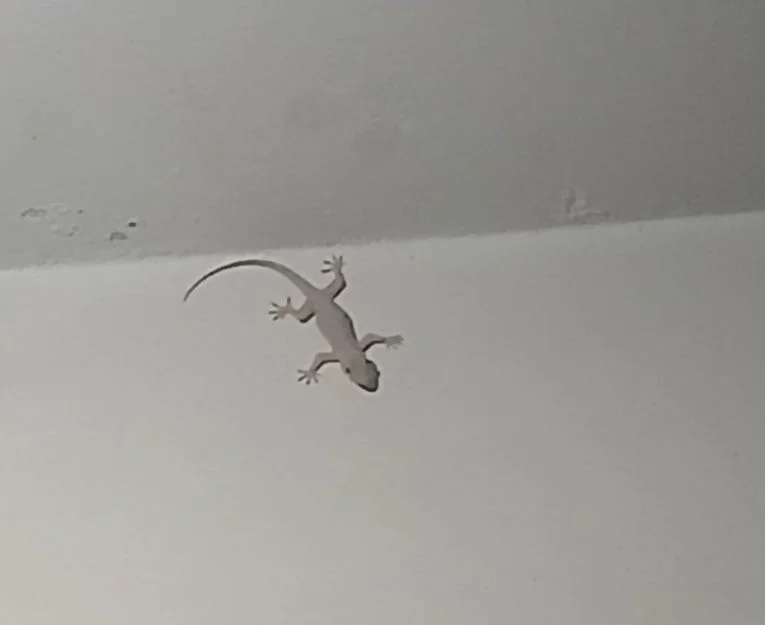 A house gecko clings upside down at the point where the ceiling meets the wall — a favorite hiding spot for these reptiles.
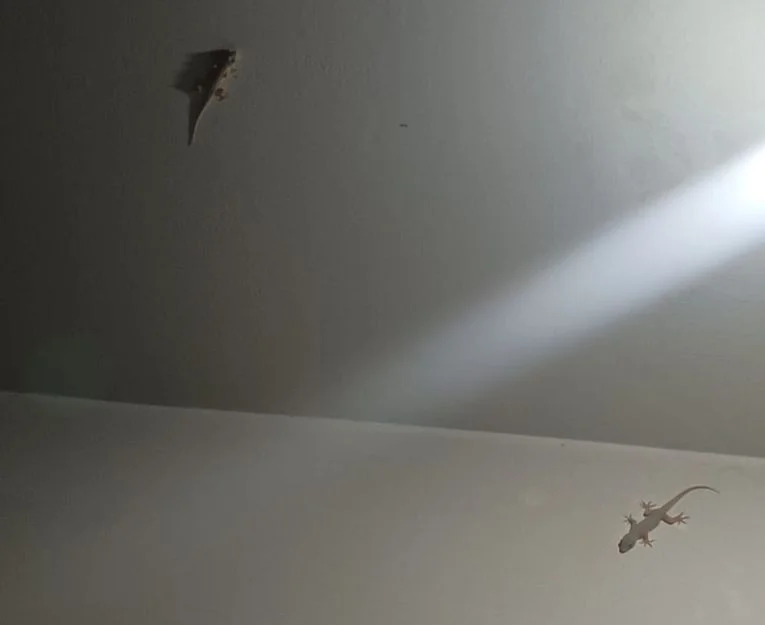
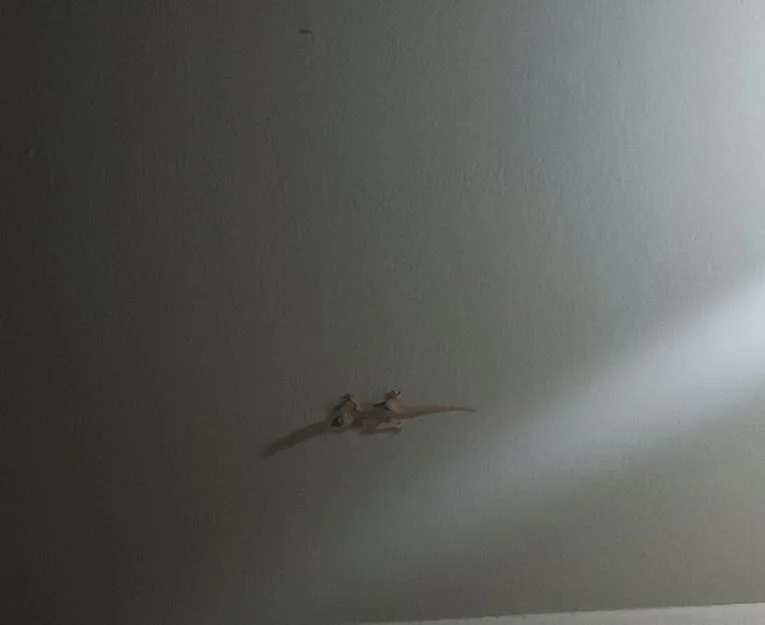 A small gecko visible in the distance on a shadowy ceiling, with a beam of light cutting across the wall.
 A house gecko spotted on an indoor wall, showing a common lizard pest problem in homes.
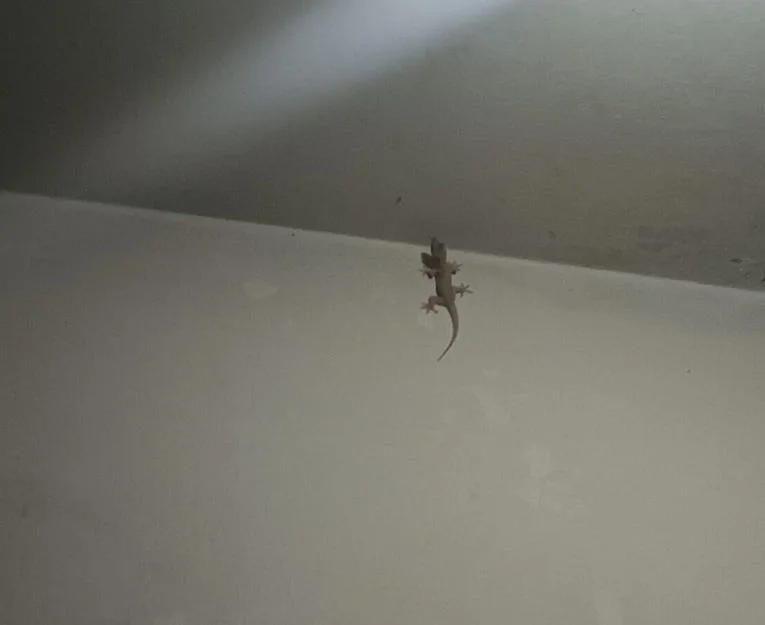
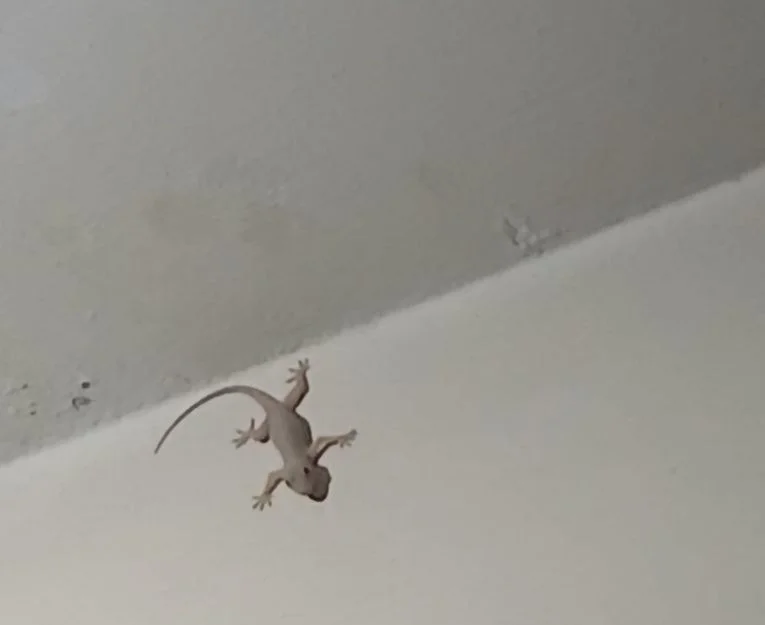 A house gecko spotted crawling along an indoor ceiling — a common sight in homes across Pakistan
Got Questions?
We’re happy to help with anything about lizard control Lahore. If you can’t find the info you’re looking for, reach out to us!
Ready to Get This Sorted?
You don’t need to be certain it’s a problem before you call. Whether it’s the same gecko in the same corner, discomfort more than damage, or a hygiene concern in a food-service setting, the first step is the same — a real inspection, not a guess over the phone.
Call or WhatsApp us. We’ll arrange your free lizard inspection at a time that works for you.
Areas We Serve for Lizard Control
Address: House No. 327, Block E-1, Johar Town, Lahore, 54782
Hours: Monday–Saturday, 9 AM – 6 PM
SAME DAY
DHA
Gulberg
Bahria Town
Johar Town
Model Town
Park View Society
24 TO 48 HOURS
Sialkot
Gujranwala
Kasur
Faisalabad
Pattoki
Gujrat
Sahiwal
Okara